Tattoos have become one of the most popular forms of self-expression worldwide. From minimalist symbols to full-body art, millions of people proudly wear permanent ink. But as tattoos become more common, an important health question continues to surface:
Are tattoos bad for your health? And more importantly, do they cause cancer?
The short answer is nuanced. Tattoos are generally considered safe when performed under proper hygienic conditions.
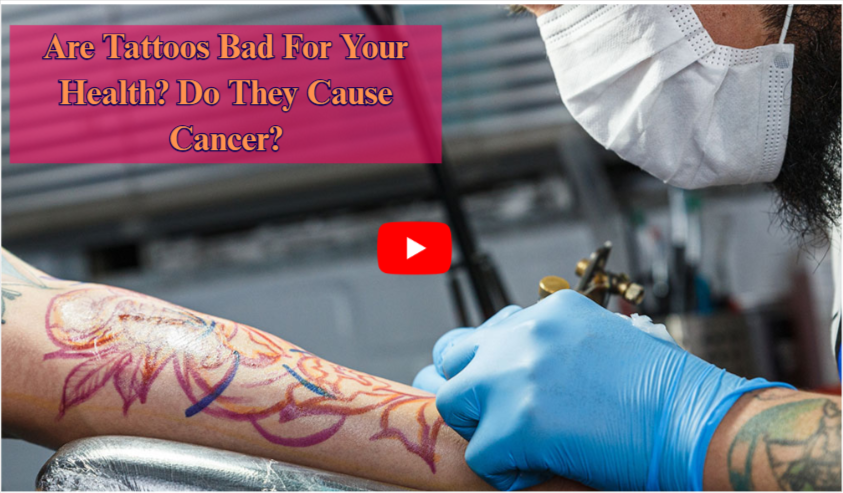

Tattoos are generally safe, but some ink ingredients may pose health risks. Research shows possible cancer links, though no direct proof exists.
However, emerging research suggests that tattoo inks may contain substances that could pose long-term health concerns.
While some studies have observed possible associations between tattoos and certain cancers, there is still no definitive proof that tattoos directly cause cancer.
How Tattoos Work Inside the Body
When you get a tattoo, a needle repeatedly punctures the skin and deposits pigment into the dermis — the second layer of skin beneath the surface.
Unlike temporary stains or cosmetics:
Tattoo ink is permanently embedded in your body. But the ink does not always stay exactly where it is placed.
Research shows that microscopic ink particles can migrate from the skin to nearby lymph nodes. The lymphatic system plays a major role in immune function. This means your immune system interacts with tattoo ink for years — potentially for life.
Your body treats tattoo ink as a foreign substance.
Immune cells attempt to break down or contain the particles. Some remain trapped in skin cells, which is why tattoos stay visible. Others may travel through the bloodstream or lymphatic channels.
This long-term interaction has raised questions about inflammation, toxicity, and possible cancer risk.
What Is Inside Tattoo Ink?
One of the biggest concerns is the composition of tattoo ink.
Tattoo inks are not universally standardized across the world. While regulations exist in some countries, ingredients can vary widely depending on the manufacturer.
Tattoo inks may contain:
-
Heavy metals such as lead, cadmium, mercury, and chromium
-
Polycyclic aromatic hydrocarbons (PAHs)
-
Azo dyes that can degrade into aromatic amines
-
Preservatives and stabilizing chemicals
Some of these substances have been classified as potentially carcinogenic in laboratory settings.
The presence of a carcinogenic substance does not automatically mean it causes cancer in tattooed individuals.
The key issue is exposure level, duration, and how the body processes these substances over time.
Do Tattoos Cause Cancer? What Research Shows
This is the central concern: Is there scientific proof that tattoos cause cancer?
1. Current Medical Consensus
At this time:
There is no definitive scientific evidence proving that tattoos directly cause cancer.
Major health organizations have not classified tattoos as a confirmed cancer risk. However, research is ongoing.
2. Observational Studies and Associations
Some large observational studies have found that tattooed individuals may have a slightly higher incidence of certain cancers, including:
-
Skin cancers such as melanoma
-
Lymphomas (cancers affecting lymph nodes)
In some twin studies, tattooed individuals showed higher rates of lymphoma compared to their non-tattooed identical twins. Interestingly, larger tattoos appeared to correlate with higher observed risk in certain analyses.
However:
Association does not equal causation.
These studies cannot prove that tattoos caused the cancer. Other factors could be involved, such as:
-
Sun exposure
-
Lifestyle habits
-
Environmental exposures
-
Genetic predisposition
Researchers themselves caution that more long-term studies are needed.
3. Lymph Node Findings
Medical imaging has revealed that tattoo ink particles can accumulate in lymph nodes. In some cases, lymph nodes may appear darkened due to pigment deposition.
This has raised concerns because:
Chronic inflammation in lymphatic tissue can theoretically contribute to cancer development.
But again, there is no direct evidence proving that tattoo pigment in lymph nodes leads to lymphoma.
The Role of Chronic Inflammation
One theory behind potential cancer risk involves inflammation.
When foreign material enters the body, the immune system responds. With tattoos, this response does not fully resolve because the ink remains permanently embedded.
Long-term, low-grade inflammation has been linked to cancer in various medical contexts.
However, the degree of inflammation caused by tattoos varies widely between individuals. Most people experience no long-term complications beyond initial healing.

Skin Cancer and Tattoos: A Closer Look
Some dermatologists have raised concerns about tattoos masking early skin cancer signs.
For example:
-
Dark pigments may hide suspicious moles.
-
Tattoo ink may make visual examination more difficult.
Delayed detection — not the tattoo itself — may increase risk in some cases.
This is why dermatologists recommend regular skin checks, especially if you have large tattoos.
Other Proven Health Risks of Tattoos
Even if cancer risk remains uncertain, tattoos do carry other established risks.
1. Infections
If equipment is not sterile, tattoos can transmit infections such as:
-
Bacterial skin infections
-
Hepatitis B
-
Hepatitis C
-
HIV (rare but possible in unregulated settings)
Choosing a licensed, reputable tattoo artist significantly reduces this risk.
2. Allergic Reactions
Red ink is particularly known for causing allergic reactions.
Symptoms may include:
-
Persistent itching
-
Raised bumps
-
Swelling
-
Rash
In rare cases, allergic reactions can become chronic.
3. Granulomas
Some individuals develop small inflammatory nodules called granulomas around tattoo pigment particles.
These are usually benign but may require medical treatment.
4. MRI Complications
Certain tattoo pigments containing metallic compounds can sometimes cause:
-
Mild burning sensations during MRI scans
-
Imaging distortions
This is uncommon but documented.
What About Laser Tattoo Removal?
Laser removal breaks ink into tiny fragments so the immune system can clear them.
There is ongoing debate about whether breaking down pigments could release potentially harmful compounds into circulation.
Current evidence does not confirm increased cancer risk from laser removal, but research continues.
Sun Exposure and Tattoos
Ultraviolet radiation can alter tattoo pigments.
Some chemical compounds may degrade into smaller molecules when exposed to sunlight.
This is why dermatologists recommend:
-
Applying sunscreen to tattoos
-
Avoiding excessive sun exposure
Protecting tattooed skin from UV damage is essential for both cosmetic and medical reasons.
Are Larger Tattoos Riskier?
Some observational data suggests that larger tattoos may correlate with higher observed lymphoma rates.
Possible reasons include:
-
Greater volume of ink
-
More prolonged immune system exposure
-
Higher cumulative chemical load
However, these findings are still under scientific review.
Size alone does not automatically mean higher cancer risk.
Who Should Be More Cautious?
Certain individuals may need to consider risks more carefully:
-
People with autoimmune conditions
-
Individuals with compromised immune systems
-
Those with a strong family history of skin cancer
-
People prone to allergic reactions
Consulting a healthcare provider before getting a tattoo is advisable in these cases.
How to Reduce Health Risks
If you decide to get a tattoo, follow these safety steps:
Choose a Licensed Studio
Ensure proper sterilization practices.
Ask About Ink Quality
Reputable artists often use regulated inks.
Follow Aftercare Instructions
Proper healing reduces infection risk.
Monitor Your Skin
Any new lump, mole change, or unusual symptom should be evaluated.
Schedule Skin Exams
Especially if you have large or dark tattoos.
The Bottom Line
So, are tattoos bad for your health?
For most healthy individuals:
Tattoos are generally safe when performed professionally and cared for properly.
Do they cause cancer?
There is currently no conclusive scientific proof that tattoos directly cause cancer.
However:
-
Some inks contain substances classified as potentially carcinogenic.
-
Ink particles can migrate to lymph nodes.
-
Observational studies suggest possible associations with certain cancers.
Science has not yet reached a final answer.
Until more long-term data becomes available, the best approach is informed decision-making and proper skin monitoring.
