Losing weight does not mean starving yourself or following extreme diets. One of the smartest and healthiest ways to support weight loss is by adding more vegetables to your meals.
Vegetables are naturally low in calories, high in fiber, packed with water, and loaded with essential vitamins and minerals.
These qualities help you stay full longer, reduce overall calorie intake, and improve overall health. Research consistently shows that diets rich in vegetables can support healthy weight management because they provide volume and satiety without excess calories.


If you’re looking to shed extra pounds while maintaining energy and nutrition, the right vegetables can make a significant difference.
In this guide, we’ll explore the 11 best vegetables for weight loss, their nutritional benefits, and practical ways to include them in your daily diet.
Why Vegetables Help With Weight Loss
Before diving into the list, it’s important to understand why vegetables are so effective for weight management.
Low in Calories
Most vegetables contain very few calories per serving. This allows you to eat larger portions without consuming excessive calories. Foods with low energy density help you feel satisfied while supporting a calorie deficit.
High in Fiber
Fiber slows digestion and promotes feelings of fullness. This can help reduce hunger and prevent overeating throughout the day. High-fiber foods are strongly associated with better weight control.
Rich in Water Content
Many vegetables contain significant amounts of water, adding volume to meals without adding calories. This helps create a feeling of fullness and satisfaction.
Nutrient-Dense
Vegetables provide essential vitamins, minerals, antioxidants, and plant compounds that support overall health while dieting.
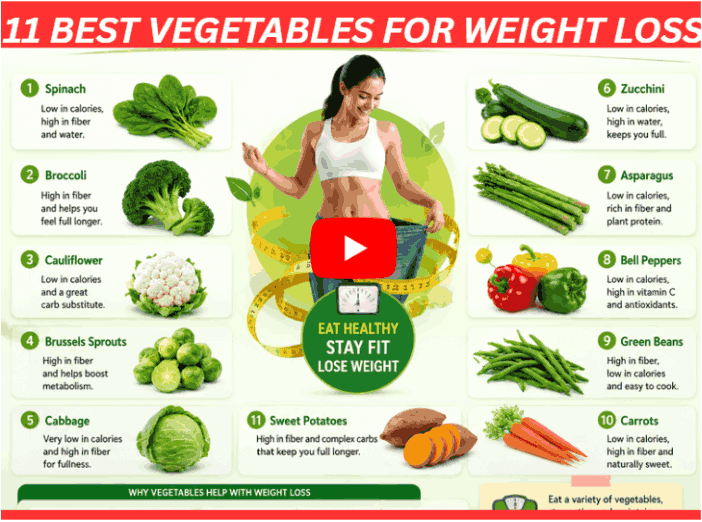
1. Spinach
Spinach is one of the most weight-loss-friendly vegetables available. It is extremely low in calories while providing fiber, vitamins, minerals, and antioxidants.
With a water content exceeding 90%, spinach helps keep you hydrated and full. The fiber content slows digestion, helping control hunger between meals. Spinach also provides vitamin K, vitamin A, vitamin C, and folate, making it a nutritional powerhouse.
Benefits for Weight Loss
- Extremely low calorie content
- High water content promotes fullness
- Contains fiber for appetite control
- Rich in essential nutrients
Ways to Eat Spinach
- Add to smoothies
- Use in salads
- Mix into omelets
- Stir into soups and stews
2. Broccoli
Broccoli is often considered one of the healthiest vegetables for weight loss. This cruciferous vegetable provides fiber, vitamins, and beneficial plant compounds while remaining low in calories.
Its high fiber content helps promote satiety and digestive health. Broccoli also contains antioxidants that support overall wellness and may help reduce inflammation.
Benefits for Weight Loss
- High fiber content
- Low calorie density
- Supports digestive health
- Helps increase meal volume
Ways to Eat Broccoli
- Steam and serve as a side dish
- Roast with olive oil
- Add to stir-fries
- Blend into soups
3. Cauliflower
Cauliflower has become a favorite among weight-loss enthusiasts due to its versatility and low-calorie profile.
It can replace higher-calorie foods such as rice, mashed potatoes, and pizza crust while significantly reducing calorie intake. Despite being low in calories, cauliflower provides fiber, vitamin C, and several beneficial antioxidants.
Benefits for Weight Loss
- Low in calories
- Excellent substitute for refined carbohydrates
- High in fiber
- Supports fullness
Ways to Eat Cauliflower
- Cauliflower rice
- Mashed cauliflower
- Roasted florets
- Cauliflower soup
4. Brussels Sprouts
Brussels sprouts are small but incredibly nutritious. They belong to the cruciferous vegetable family and offer an impressive amount of fiber for their calorie content.
Fiber helps slow digestion and reduce hunger, making Brussels sprouts an excellent addition to a weight-loss diet. They are also rich in vitamins C and K.
Benefits for Weight Loss
- High fiber content
- Low calorie count
- Promotes satiety
- Rich in antioxidants
Ways to Eat Brussels Sprouts
- Roast until crispy
- Air fry for a healthy snack
- Add to salads
- Mix into vegetable bowls
5. Cabbage
Cabbage is a budget-friendly vegetable that can support weight-loss goals effectively.
It contains very few calories while delivering fiber, vitamins, and beneficial plant compounds. Because it adds bulk to meals, cabbage helps create filling dishes without significantly increasing calorie intake.
Benefits for Weight Loss
- Low calorie density
- High water content
- Good source of fiber
- Versatile in many recipes
Ways to Eat Cabbage
- Coleslaw
- Stir-fries
- Soups
- Cabbage wraps
6. Zucchini
Zucchini is another low-calorie vegetable ideal for weight management.
Its high water content contributes to fullness while keeping calorie intake low. Zucchini can also replace higher-calorie pasta through zucchini noodles, commonly known as zoodles.
Benefits for Weight Loss
- Very low in calories
- High water content
- Supports hydration
- Useful pasta alternative
Ways to Eat Zucchini
- Zoodles
- Grilled slices
- Roasted vegetables
- Added to casseroles
7. Asparagus
Asparagus is a nutrient-rich vegetable that provides both fiber and protein while remaining very low in calories.
Fiber and protein are two nutrients known to support satiety, making asparagus an excellent addition to weight-loss meals. It also contains several B vitamins and antioxidants.
Benefits for Weight Loss
- Contains fiber and protein
- Low calorie content
- Supports fullness
- Rich in nutrients
Ways to Eat Asparagus
- Grilled
- Roasted
- Steamed
- Added to salads
8. Bell Peppers
Bell peppers are colorful vegetables packed with nutrients and very few calories.
They provide vitamin C, antioxidants, and fiber while adding flavor and crunch to meals. Their high water content helps increase meal volume and satisfaction.
Benefits for Weight Loss
- Low-calorie snack
- High water content
- Rich in vitamin C
- Adds flavor without excess calories
Ways to Eat Bell Peppers
- Raw with hummus
- Stuffed peppers
- Stir-fries
- Salads
9. Green Beans
Green beans are a nutritious vegetable that combines fiber, vitamins, and minerals with a low calorie count.
Their fiber content supports fullness and healthy digestion. Green beans are also versatile and easy to prepare.
Benefits for Weight Loss
- High fiber content
- Low calories
- Supports digestion
- Easy to prepare
Ways to Eat Green Beans
- Steamed
- Roasted
- Stir-fried
- Added to casseroles
10. Carrots
Carrots are often underestimated in weight-loss diets, but they are actually an excellent choice.
They contain fiber, water, and natural sweetness that can help satisfy cravings for sugary snacks. Their crunchy texture also promotes mindful eating and satiety.
Benefits for Weight Loss
- High fiber content
- Naturally sweet
- Low-calorie snack
- Rich in beta-carotene
Ways to Eat Carrots
- Raw snacks
- Roasted carrots
- Soups
- Salads
11. Sweet Potatoes
Although sweet potatoes are higher in calories than leafy greens, they can still support weight loss when eaten in moderation.
They are rich in fiber and complex carbohydrates that help keep you full for longer periods. Sweet potatoes can satisfy cravings while providing valuable nutrients such as vitamin A and potassium.
Benefits for Weight Loss
- High fiber content
- Promotes fullness
- Nutrient-rich
- Supports sustained energy
Ways to Eat Sweet Potatoes
- Baked
- Roasted wedges
- Mashed
- Added to grain bowls
Tips for Using Vegetables to Lose Weight
Fill Half Your Plate
Aim to make vegetables at least half of every meal. This naturally reduces calorie intake while increasing fullness.
Replace High-Calorie Foods
Swap calorie-dense foods with vegetables whenever possible. Examples include:
- Cauliflower rice instead of white rice
- Zoodles instead of pasta
- Lettuce wraps instead of tortillas
Include Vegetables at Every Meal
Adding vegetables to breakfast, lunch, dinner, and snacks can significantly increase fiber intake and satiety.
Choose Healthy Cooking Methods
Opt for:
- Steaming
- Roasting
- Grilling
- Air frying
Avoid excessive butter, cream sauces, or deep frying, which can add significant calories.
Pair With Protein
Combining vegetables with lean protein creates balanced meals that help keep hunger under control.
Sample One-Day Weight Loss Meal Plan Featuring Vegetables
Breakfast
Spinach and vegetable omelet with tomatoes and bell peppers.
Morning Snack
Carrot sticks with hummus.
Lunch
Grilled chicken salad with spinach, cabbage, bell peppers, and cucumbers.
Afternoon Snack
Roasted Brussels sprouts.
Dinner
Baked salmon with broccoli and asparagus.
Evening Option
A small serving of roasted sweet potato.
This approach delivers fiber, nutrients, and satisfying volume while helping maintain a calorie deficit.
Common Mistakes to Avoid
Relying Only on Vegetables
While vegetables are important, successful weight loss also requires adequate protein, healthy fats, and balanced nutrition.
Overusing High-Calorie Dressings
Healthy vegetables can quickly become calorie-dense when covered in creamy dressings or sauces.
Drinking Calories
Sugary beverages can undermine weight-loss efforts even when eating plenty of vegetables.
Ignoring Portion Sizes
Although vegetables are low in calories, total calorie intake still matters.
Final Thoughts
Vegetables are among the most powerful foods for healthy and sustainable weight loss. Their combination of low calories, high fiber, high water content, and rich nutrient profile makes them ideal for creating filling meals that support a calorie deficit without leaving you hungry.
Whether you choose spinach, broccoli, cauliflower, Brussels sprouts, cabbage, zucchini, asparagus, bell peppers, green beans, carrots, or sweet potatoes, incorporating more of these vegetables into your daily routine can help you reach your weight-loss goals while improving overall health.
The best strategy is consistency. Focus on filling your plate with a variety of colorful vegetables, pair them with lean proteins and healthy fats, and maintain an active lifestyle.
Over time, these simple habits can lead to lasting weight-loss success and better long-term wellness.

References
